
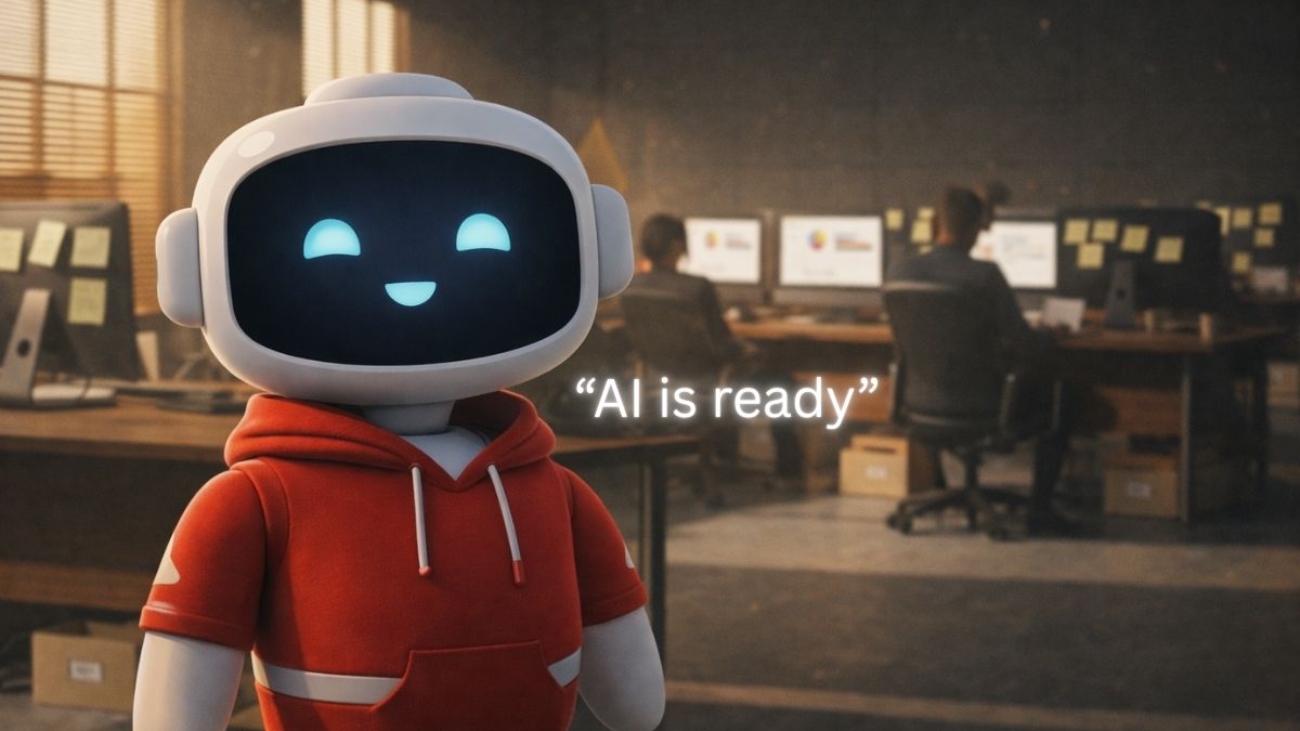
Something has changed in how people talk about AI.
They’re no longer asking:
“What can AI generate?”
They’re asking:
“What can AI do—on its own?”
That’s why searches for AI agents are rising.
Not because people want another chatbot.
But because they want something that can finally take responsibility for them.
The Expectation Behind the Trend
When organizations talk about AI agents, they’re really expressing one hope:
“Can something handle this without me explaining everything?”
They want AI that:
- Acts, not just responds
- Decides, not just suggests
- Moves work forward, not creates more of it
So it is connected to emails.
To documents.
To chat threads.
To folders full of history.
And then people wait for autonomy to appear.
It doesn’t.
Where the Expectation Breaks
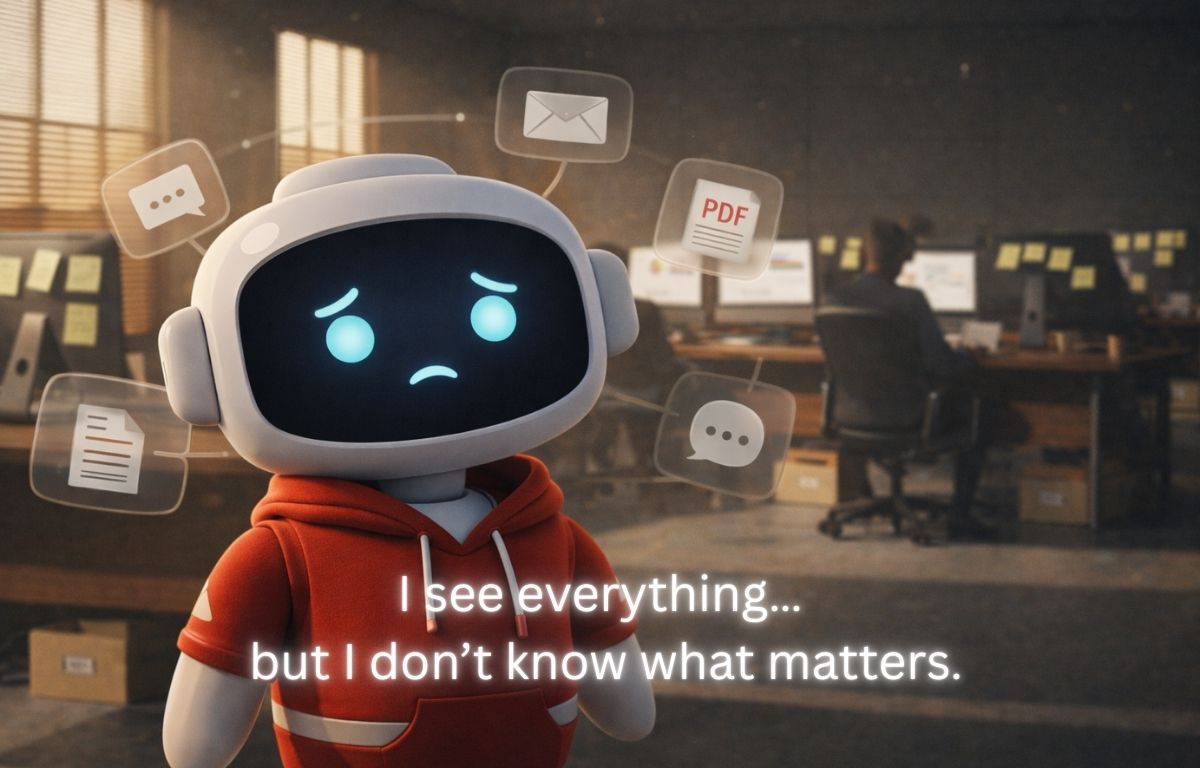
AI Agents don’t fail because they lack intelligence.
They fail because they’re asked to operate on inside information that was never designed to be understood—by humans or machines.
AI sees:
- Text without intent
- Files without authority
- Conversations without conclusions
It doesn’t know:
- Which version is final
- Which email closed the loop
- Which document overrides another
- Which decision still applies
So the agent hesitates.
Or guesses.
Or stalls.
Autonomy collapses without understanding.
This is why two people can read the same document and draw different conclusions.
Meaning was never stored—only content was.
Humans fill that gap instinctively.
AI cannot.
When intent isn’t declared, when authority isn’t defined, and when outcomes aren’t marked, AI treats everything as equally important.
The result isn’t failure.
It’s hesitation, overconfidence, or silence—depending on the situation.
The Mistake We Keep Making
The rise of AI agents didn’t create this problem.
It exposed it.
For years, organizations relied on people to:
- Interpret context
- Remember decisions
- Reconnect scattered information
AI Agents were expected to replace that effort.
But they inherited the same confusion—just faster.
AI agents don’t struggle with action. They struggle with meaning.
Ambiguity forces systems to guess, slows autonomy, and turns intelligent agents into cautious assistants instead.
What This Article Is Really About
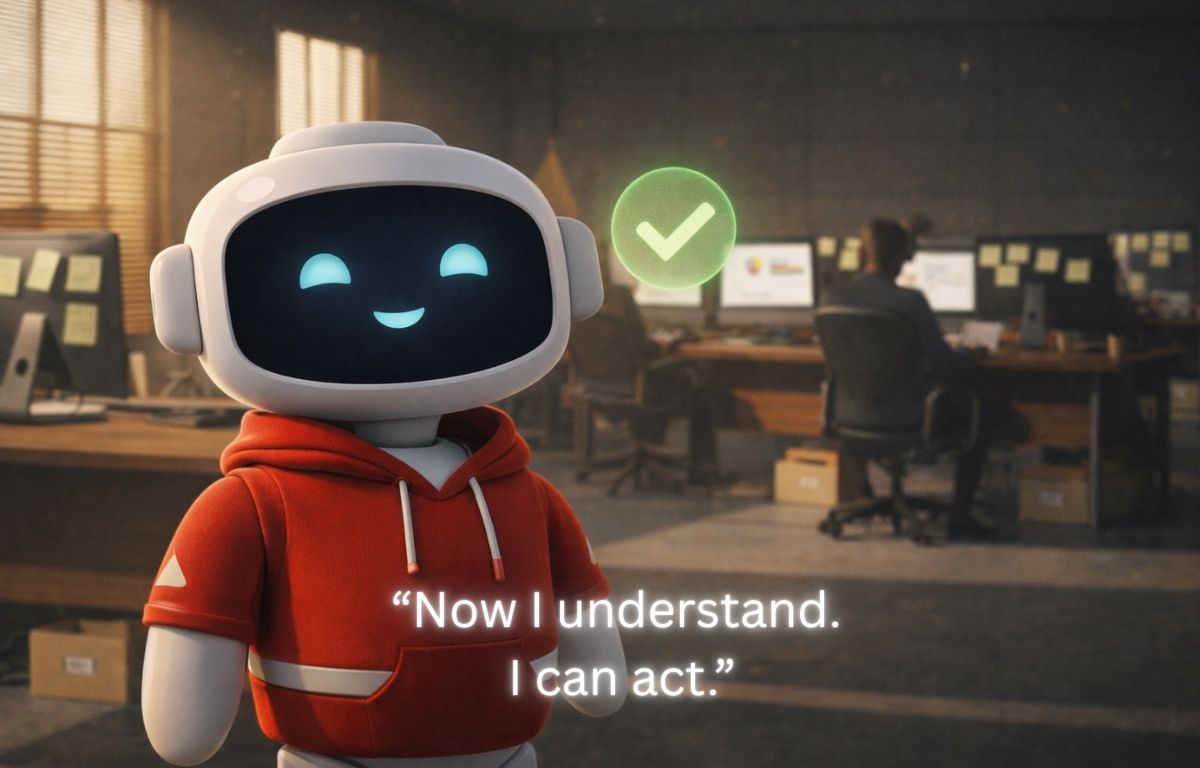
This isn’t an article about AI Agents.
It’s about why autonomy fails when understanding is missing.
Until information carries:
- Context
- Boundaries
- Relationships
- Intent
AI—no matter how advanced—will keep guessing instead of acting.
And no agent can take responsibility for information that doesn’t explain itself.
The Real Takeaway

So, agents don’t fail because they aren’t powerful enough.
They fail because they’re asked to take responsibility for information that was never prepared for it.
Autonomy breaks down when:
- Files don’t explain themselves
- Decisions aren’t made explicit
- Context lives in people’s heads
- Meaning gets lost across tools
When information carries context, intent, and connection,
AI stops guessing.
Agents stop hesitating.
And answers start moving work forward.
That’s when it becomes trustworthy enough to act.
And how you get there depends on where your information already lives.
If your organization operates inside the Microsoft ecosystem—
Outlook, Teams, SharePoint, OneDrive—
This readiness can be designed through a custom Copilot agent, built around how your real files behave, how decisions are embedded in conversations, and how boundaries are respected.
That’s where Ixora comes in.
We don’t build agents first.
We prepare information so agents can actually work.
If your data lives outside Microsoft—
Google Workspace, Drive, or mixed environments—
The same principle applies.
Through an agentic approach using platforms like OpenAI or Google Gemini, unstructured information can still be given structure, relationships, and guardrails.
Different platforms.
Same foundation.
Because the future of AI isn’t about smarter agents.
It’s about information that’s finally ready to be trusted with responsibility.
And when that happens,
AI doesn’t just assist.
It acts.

Add a Comment