
For a long time, custom software was seen as a difficult decision.
Expensive.
Time-consuming.
Complex.
So companies chose the easier path.
SaaS tools.
Pre-built systems.
Standard workflows.
And in the beginning—
It worked.
Fast deployment.
Lower upfront cost.
Quick results.
But over time—
Something changes.
The Quiet Shift
As businesses grow, their needs stop being standard.
Processes evolve.
Pricing becomes complex.
Operations become layered.
Decisions become more dependent on context.
And that’s where generic systems start to struggle.
Not because they are bad—
But because they are built for the average.
And no growing business stays average.
The SaaS Ceiling
At some point, companies hit a limit.
The system still works.
But not fully.
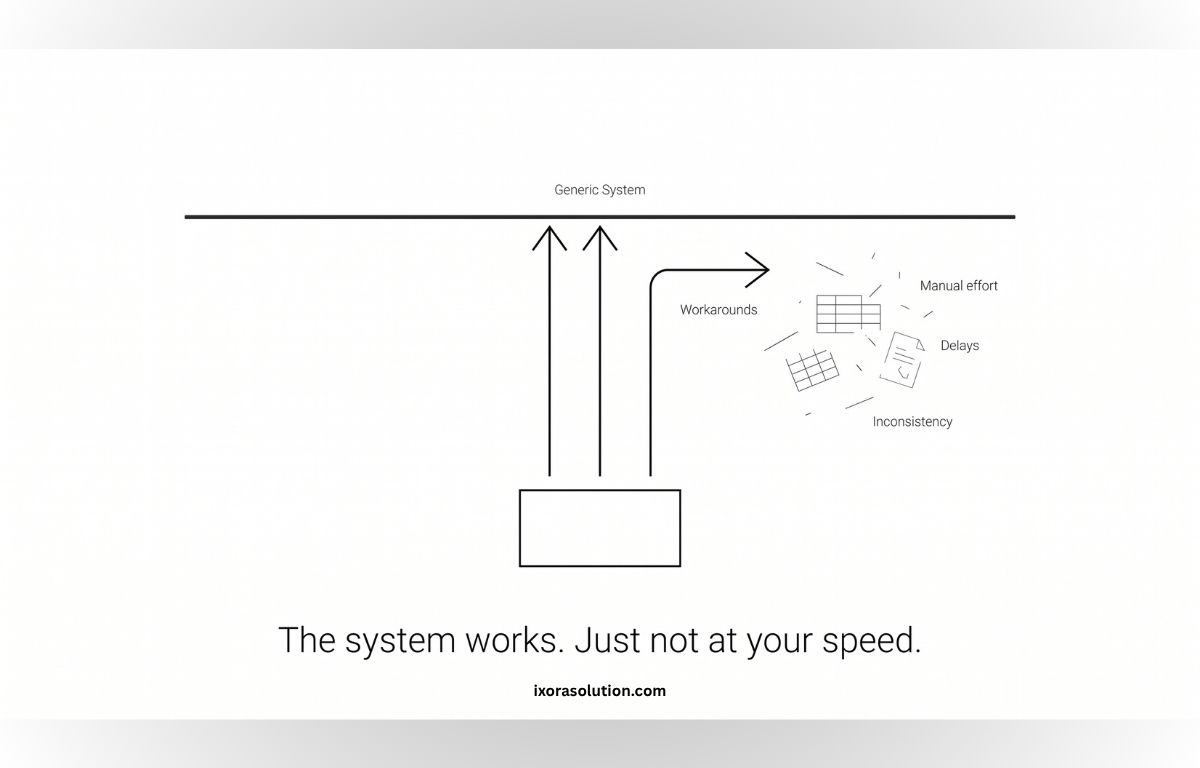
So teams adapt.
They create workarounds.
They build spreadsheets.
They adjust their process to fit the tool.
And slowly
The system that was supposed to simplify work—
Starts creating friction.
This is the SaaS ceiling.
Where tools are 80% aligned—
But the remaining 20% affects everything.
That 20% becomes:
- Manual effort
- Operational delay
- Data inconsistency
- Decision friction
And most importantly—
Loss of control.
The Real Cost
The cost is not in licensing.
It’s in limitation.
When your system defines your workflow—
Your business stops adapting freely.
You start making decisions based on:
“What the system allows.”
Instead of:
“What the business needs.”
And that’s a dangerous place to be.
Because growth requires flexibility.
The Shift Toward Control
This is where custom software begins to take on a new meaning.
It’s no longer about building something from scratch.
It’s about:
- Aligning systems with real workflows
- Structuring data around decisions
- Designing processes that reflect reality
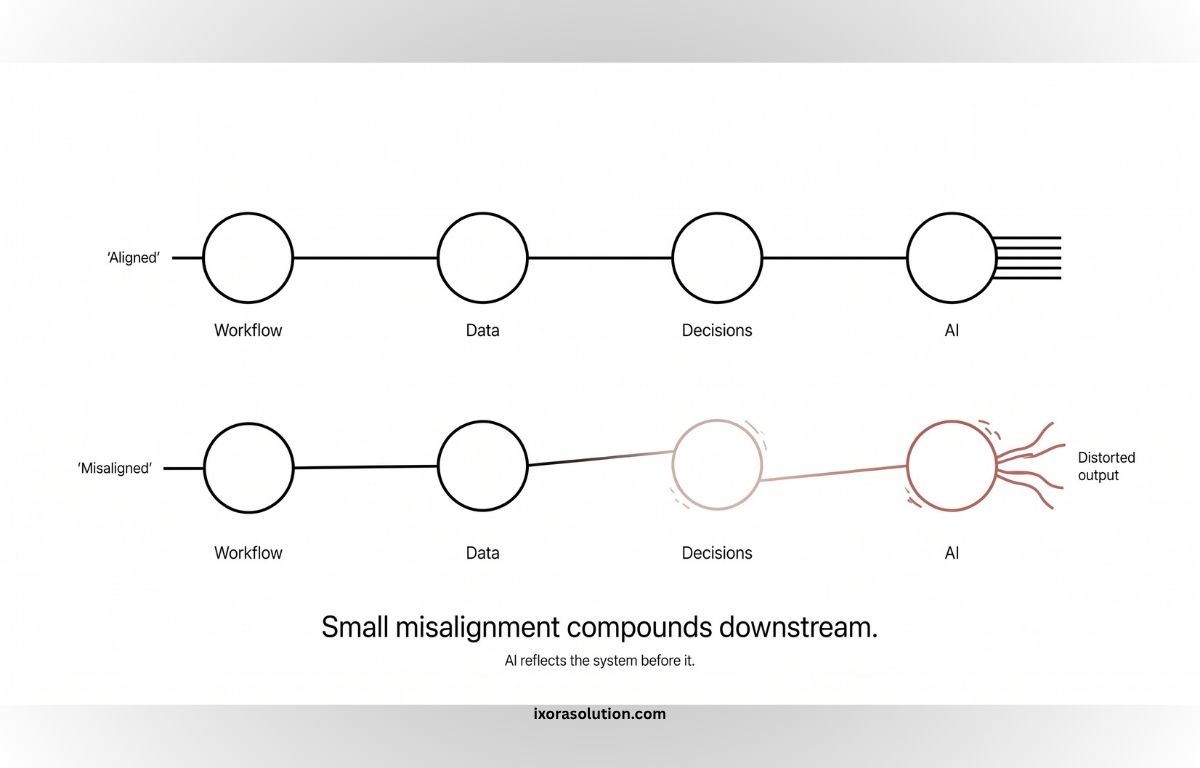
- Creating space for AI actually to work
Because AI does not perform well inside broken systems.
It amplifies them
So before intelligence—
There must be structure.
Ownership Changes Everything
There’s another layer to this.
With generic systems—
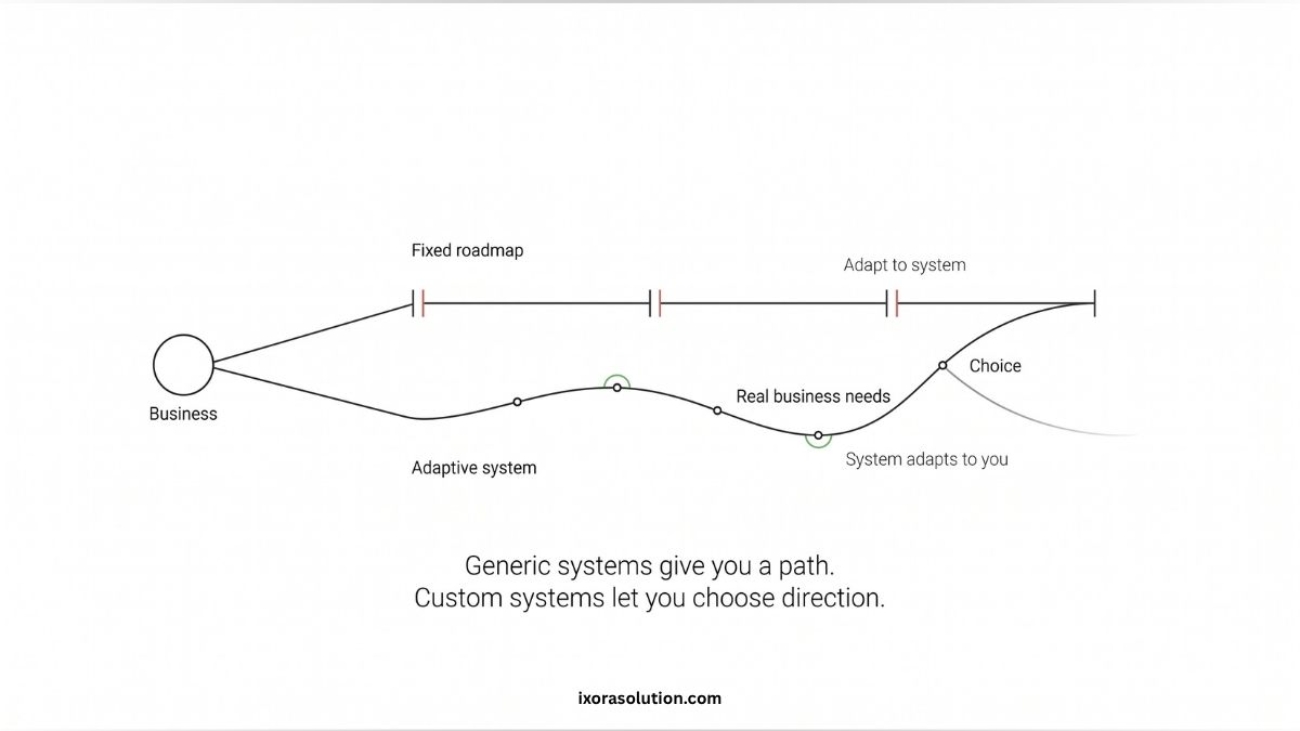
You adapt to the roadmap.
With custom systems—
The roadmap adapts to you.
That changes:
- Speed of decision-making
- Ability to innovate
- Control over data
- Long-term cost structure
And most importantly—
Your ability to evolve.
Why This Matters Now
This shift didn’t feel urgent before.
Now it does.
Because:
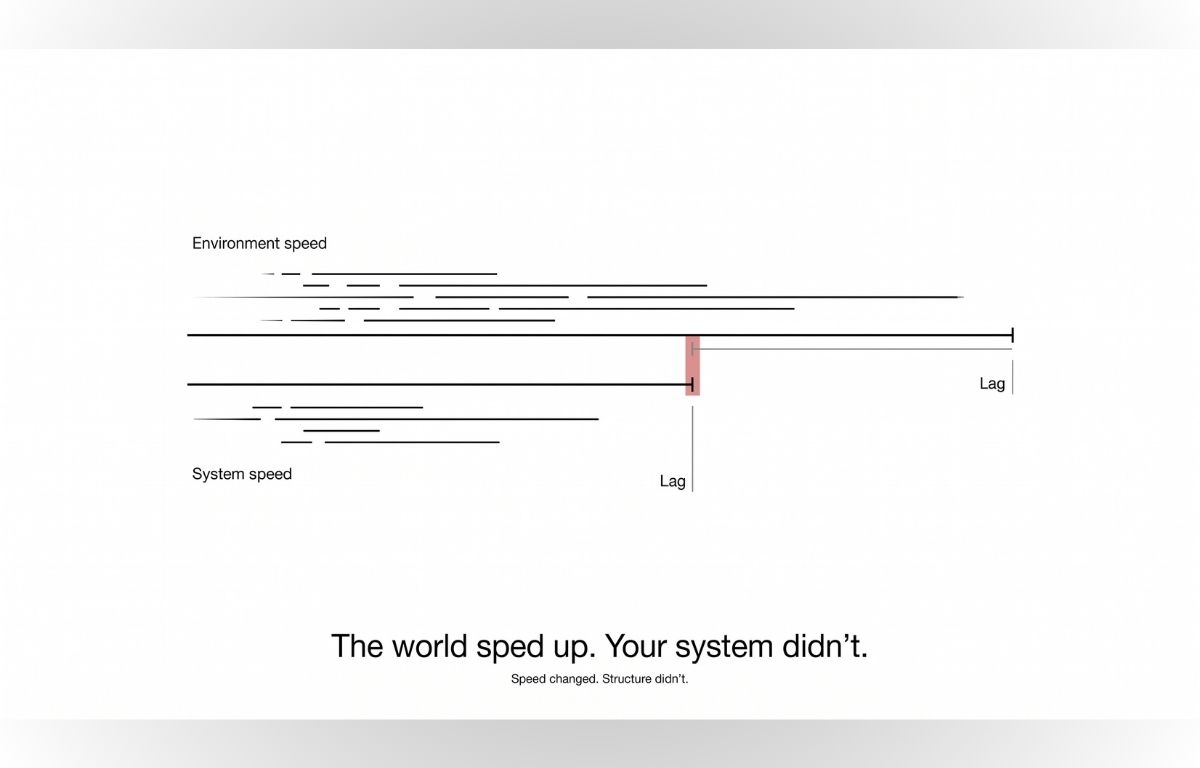
- AI is changing how fast businesses operate
- Markets are becoming more dynamic
- Decision windows are shrinking
And systems that cannot adapt—
Become bottlenecks.
Not support systems.
The Misunderstanding
Many companies still see custom software as:
A big project.
A long timeline.
A high-risk move.
But in reality—
The risk is not in building.
The risk is in staying dependent
on systems that don’t fit anymore.
The New Perspective
The companies moving forward today—
Are not replacing everything at once.
They are:
- Identifying critical friction points
- Solving specific workflows
- Building around real needs
- Expanding gradually
Not transformation.
Alignment.
Final Thought
Custom software is no longer about technology.
It’s about control.
Control over:
- How your business operates
- How your data flows
- How your decisions are made
Because in a world where everything is accelerating—
The real advantage is not speed.
It’s:
Having a system that moves at your speed.
About iXora
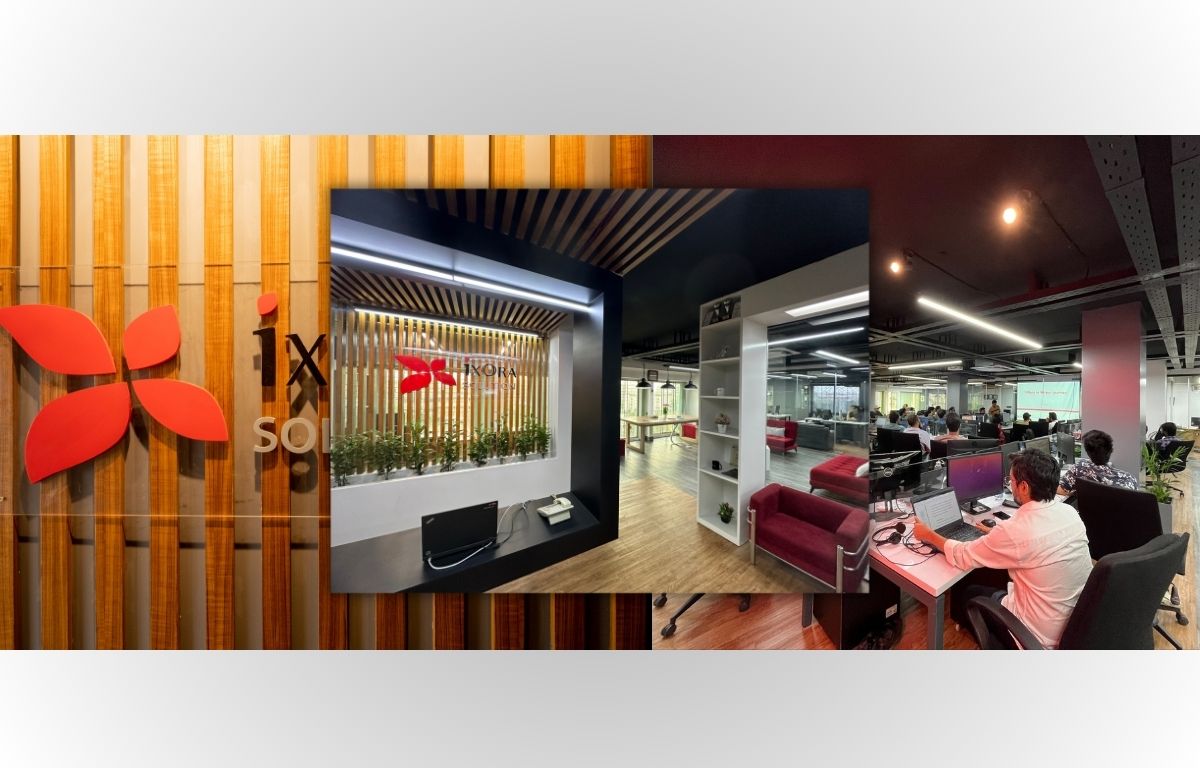
If your business has outgrown the way your systems work,
You don’t need another tool.
You need alignment.
At iXora Solution, we work as a remote offshore team with organizations that have reached that point—
where SaaS no longer fits, workflows feel forced, and decisions depend more on effort than clarity.
Portfolios here.
Our approach is simple:
We don’t start with technology.
We start with how your business actually operates.
We analyze your workflows, identify the micro-frictions that slow you down,
and design systems that align with your real processes—not the other way around.
From there, we help you build:
- Custom software that reflects how your business truly works
- AI-ready data structures that support faster, more confident decisions
- Scalable architectures that evolve as your operations grow
If your workflows live inside the Microsoft ecosystem—
Outlook, Teams, SharePoint, OneDrive—
We can design custom Copilot agents that understand not just your files, but how your teams interact with them.
If your environment spans Google Workspace or mixed systems,
We architect agentic solutions using platforms like OpenAI or Gemini or else—bringing structure, context, and control to unstructured information.
And we don’t believe in “big transformation” risks.
We start small.
A single workflow.
A specific bottleneck.
A measurable outcome.
Because real change doesn’t come from replacing everything.
It comes from fixing what matters first.
If you’re at the point where your systems are no longer keeping up with your business—
That’s usually where the right conversation begins.

Add a Comment