
Let me start with something simple.
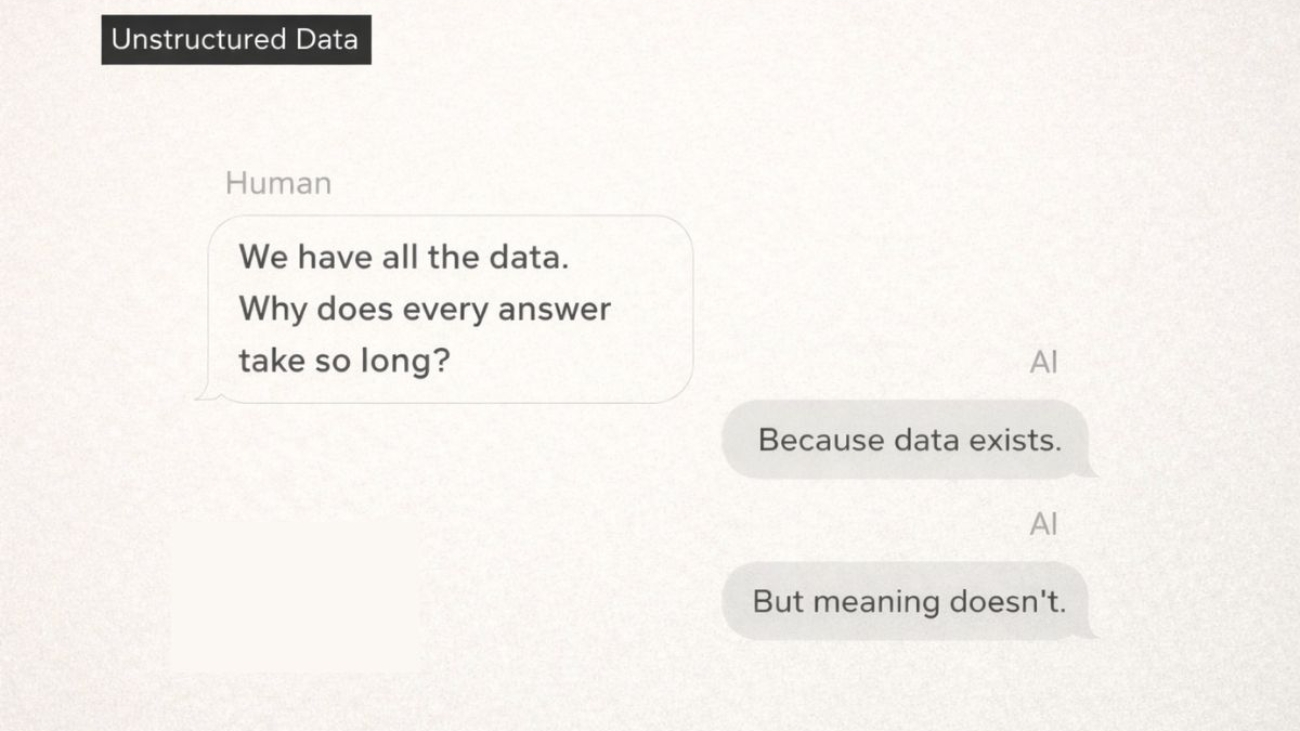
Every organization today has more data than ever before.
More tools.
More dashboards.
More reports.
And yet—
Every important question still seems to take too long to answer.
Not because the answer doesn’t exist.
But because it’s somewhere.
That’s not a technology problem.
That’s an information problem.
The Kind of Data No One Talks About
Most people think data looks like tables, numbers, rows, and columns.
But that’s not how work actually happens.
Work happens in:
- Emails
- PDFs
- Contracts
- Meeting notes
- Chat threads
- Attachments
- Slides
- Documents called
Final_Final_Updated_v3
This is unstructured data.
Unstructured data is information that doesn’t live in neat fields.
It doesn’t follow a strict format.
It wasn’t designed for systems to understand.
It was designed for humans.
And today, it makes up most of what organizations actually use to think and decide.
The Illusion of “Having Data”
Here’s the mistake many companies make:
They assume that because information exists, it is usable.
It isn’t.
Unstructured data can be:
- Read, but not interpreted
- Stored, but not understood
- Found, but not trusted
- Copied, but not connected
So when a question is asked—
“What did we agree with this customer?”
“Is this number final?”
“Are we exposed here?”
The answer exists.
But it doesn’t arrive ready.
Why Decisions Slow Down
Decisions don’t slow down because people are slow.
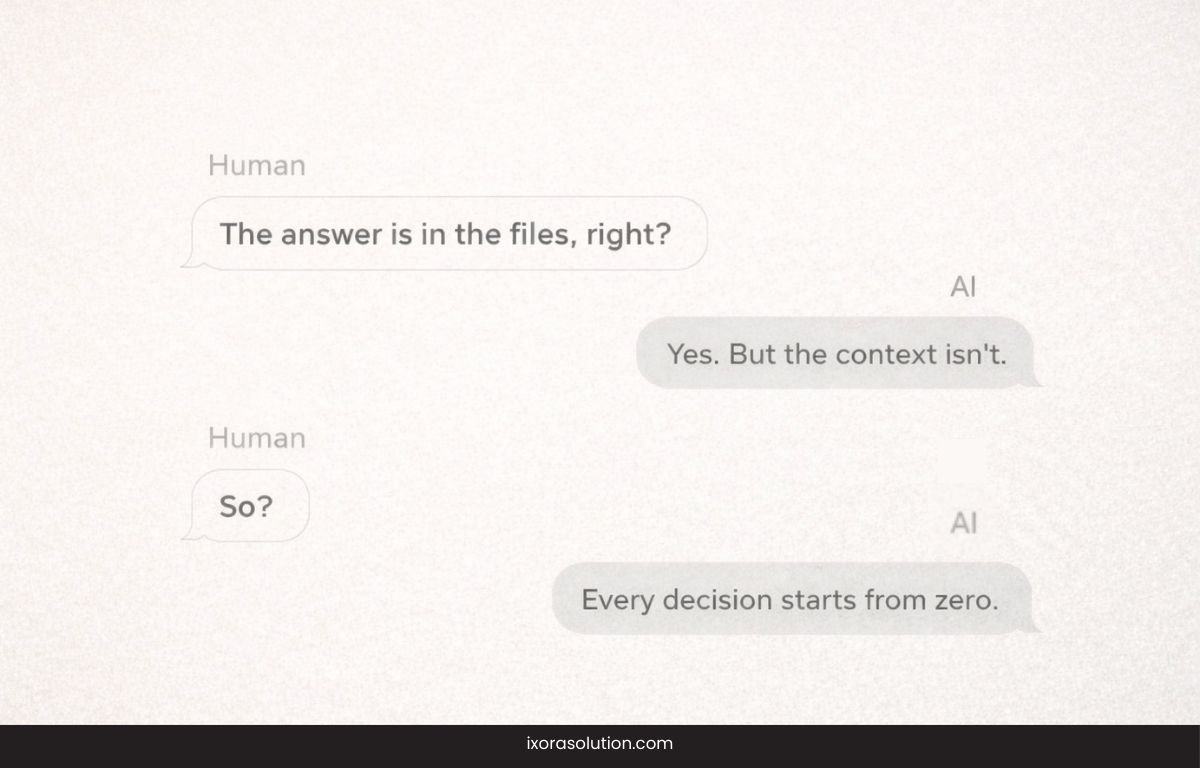
They slow down because context has to be rebuilt every single time.
Here’s the loop nobody writes about:
- A question is asked
- Someone searches
- Files are forwarded
- Attachments are downloaded
- Context is re-explained
- Versions don’t match
- Someone says, “Let me double-check.”
This isn’t chaos.
This is invisible manual work.
And it happens all day, every day.
The Real Cost Isn’t Time. It’s Confidence.
When answers take too long:
- Teams hesitate
- Leaders delay
- Decisions get softened
- Risk gets ignored instead of resolved
Over time, organizations become cautious—not because they lack ambition, but because clarity is expensive.
And when clarity is expensive, speed disappears.
Why Reports Disagree (Even Inside the Same Company)
You’ve seen this.
Two reports.
Same company.
Same month.
Different numbers.
That doesn’t happen because people are careless.
It happens because:
- Data came from different documents
- Context was interpreted differently
- One version was newer, but not obvious
- Assumptions were hidden in emails
Unstructured data doesn’t declare itself.
It whispers.
Why AI Struggles With This
Now everyone wants AI to help.
But AI doesn’t fail because it’s not smart enough.
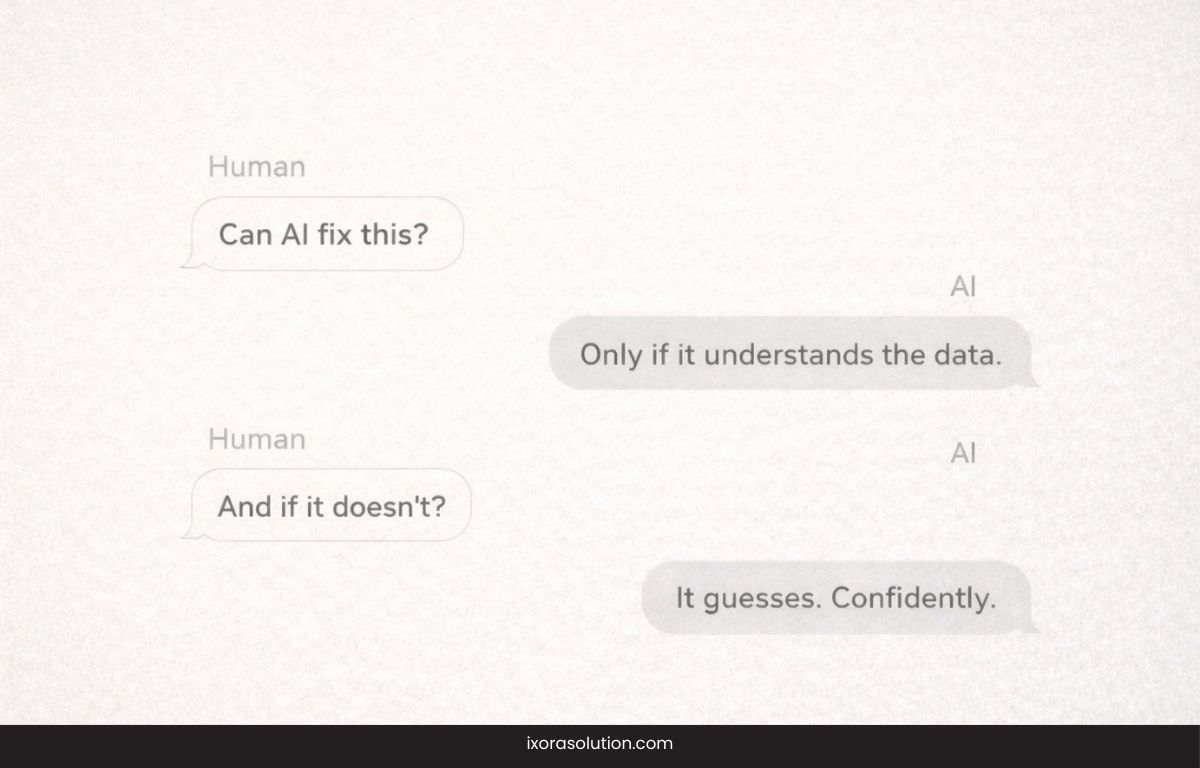
It fails because the information it reads has no rules.
AI can read a document.
But it doesn’t know:
- Which version is final
- Which clause overrides another
- Which sentence is critical
- Which file is sensitive
- Which decision still applies
So it fills in the gaps.
And when data lacks structure, AI fills gaps with confidence.
That’s when answers sound right—but aren’t.
The Problem Was Never Storage
For decades, we treated files like boxes.
Put them somewhere safe.
Name them.
Organize folders.
That was enough when work moved slowly.
It isn’t anymore.
Because decisions don’t need storage.
They need prepared information.
A Different Way to Think About Data
Here’s the shift.
Information shouldn’t wait for humans to interpret it.
It should arrive already explained.
That means:
- Files carry context, not just content
- Documents expose obligations and deadlines
- Emails surface decisions, not just conversations
- Information connects itself to what matters next
This isn’t about control.
It’s about clarity.
Why This Changes Everything
When information is structured:
- Decisions speed up
- Confidence returns
- AI becomes useful
- Risk becomes visible
- People stop rebuilding context
Not because they worked harder.
But because the system respected their time.
One Final Thought
Most organizations don’t have a data problem.
They have a clarity problem.
And clarity doesn’t come from more tools.
It comes from information that knows how to behave.
When that happens, decisions stop feeling heavy.
They start feeling obvious.
The Real Takeaway
So here’s the simple truth.
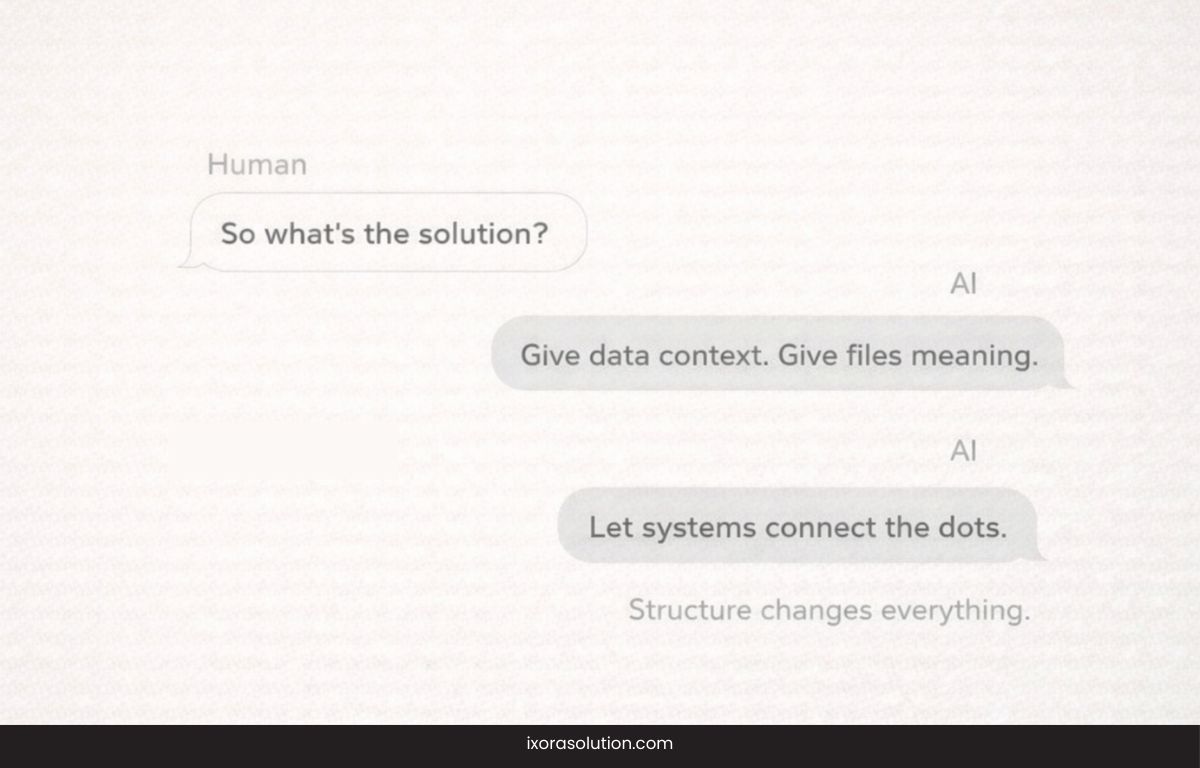
Structuring unstructured data isn’t a technical upgrade.
It’s a business advantage.
It doesn’t matter what industry you’re in.
If your decisions depend on emails, documents, PDFs, contracts, content or conversations—
Then clarity is either helping you move forward
or quietly slowing you down.
When information carries context, meaning, and connection,
decisions stop feeling heavy.
They start feeling obvious.
And how you get there depends on where your data lives.
If your organization works inside the Microsoft 365 ecosystem—
Outlook, Teams, SharePoint, OneDrive—
This clarity can come through a custom Copilot agent, designed specifically around how your files behave, not just where they’re stored.
If your data lives elsewhere—
Google Workspace, Drive, mixed cloud environments—
The same outcome is still possible.
With an agentic approach using platforms like OpenAI Agent Builder or Google Gemini, unstructured data can still be given structure, context, and intelligence.
Different tools.
Same idea.
Because the goal was never the technology.
The goal was always this:
information that’s ready when decisions need to be made.
Talk to Ixora Solution to understand how a conversational AI Agent can bring structure, safety, and speed back into your organization/business

Add a Comment